


-
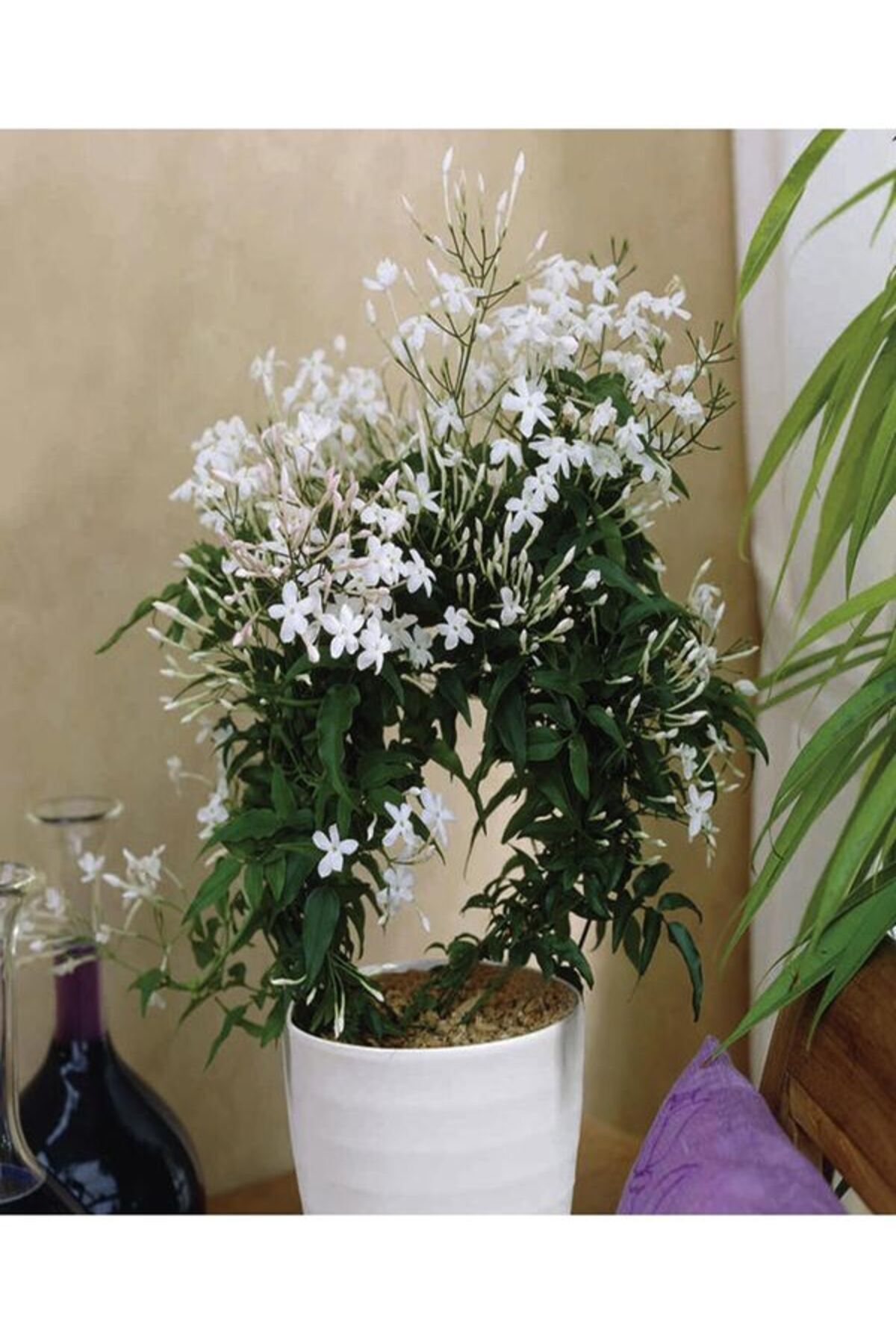
Video Chinese Jasmine Scented White (20 60Cm) 1 Potted Jasmine Seedling Jasminum Polyanthum Jasmine
-
Plants that come into contact with your hands may have small differences in flowerless, leafless or height due to the season.
-
However, if there is any breakage or fading, you can contact us and request a new product supply.
-
All products from the production greenhouse are sent with production Potted\Tube.
-
Light: Chinese Jasmine likes places with direct sunlight, but it should be protected from the extremely hot sun in the afternoon.
-
A semi-shade or brightly lit place may also be appropriate.
-
Irrigation: Irrigation should be done after the soil surface is slightly dried.
-
It is important to use a drained pot to prevent excess water from accumulating under the pot.
-
Chinese Jasmine is resistant to drought conditions, but providing regular water encourages its development.
-
Soil: Use a well-drained, light, humid soil.
-
Soil may have acidic or neutral pH levels.
-
Fertilization: During the period of active growth (usually in spring and summer), you can feed Chinese Jasmine with a liquid houseplant fertilizer.
-
Regular fertilization helps you to get a healthy and flowering plant.
-
Potted Change: You can change the Chinese Jasmine when the roots reach the bottom of the pot or when the soil seems to be completely depleted.
-
Generally, it may be appropriate to change the pot every 2-3 years.
-
Pruning: Chinese Jasmine can be shaped by frequent pruning.
-
Pruning prevents the plant from getting stuck and promotes more intense growth.
-
Pruning leafy branches, especially after the flowering period, can help the plant bloom more often.
-
Temperature and Humidity: likes Chinese Jasmine, mild temperature conditions.
-
It is important to keep it in a cool, but not freezing, environment in winter.
-
Using an air humidifier next to the plant can increase humidity levels in indoor conditions.
-
Pests and Diseases: Chinese Jasmine can be particularly susceptible to pests such as whiteflies and spider mites.
-
Check the plant regularly and take immediate control measures if you see pests.
•
•
•
•
•
•
•
•
•
•

favorite
account_circle
shopping_bag
Cart Catalogue
