


-
Recommended age: 5-99
-
Number of players: 2
-
Areas for Development
-
Attention and concentration.
-
Strategy and Logic Execution
-
Social/Emotional Development
-
Game Content:
-
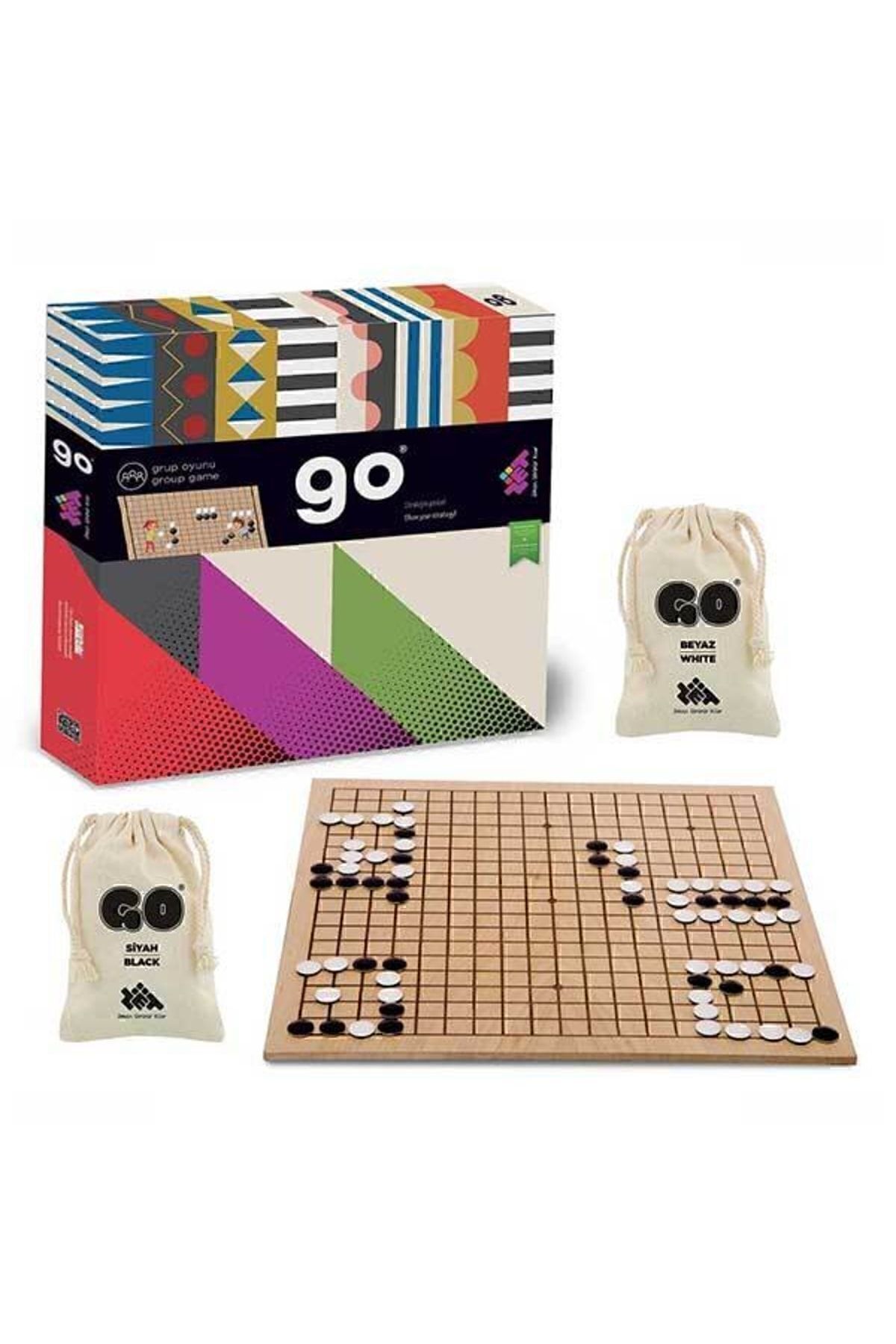
1 game platform consisting of 19X19 bays (Official tournament size)
-
180 white stones
-
181 black stones
-
2 pieces of cloth game stones bag
-
Game Preparation:
-
Remove the game platform and tiles from the box.
-
Place the platform on a flat surface in the middle of the players.
-
Determine the colors by drawing lots.
-
The main goal in the game is to dominate the largest area.
-
How To Play
-
The player with the black pieces always starts the game.
-
Players place their pieces alternately on the platform where the lines intersect.
-
The left stones remain on the platform until the end of the game.
-
(except taking prisoners/falling)
-
Players surround the opponent stone with their own stones (close their breathing points) and if there are no empty intersections around it, they capture that stone or group of stones.
-
Captured stones are taken out of the game platform and cannot be reused.
-
Caution:
-
Players can drop their stones all over the platform from the first moment, but they cannot place them where the opponent surrounds them and only has one intersection (no other breathing space).
-
(Because it counts as suicide) Stone can be left in the area surrounded by the opponent and with more than one intersection, the strategy you will use here is important.
-
The blocks of the players are connected to each other in line with horizontal and vertical lines, it is not possible with cross ties.
-
In the event that the opponent surrounds one of your stones with a single breathing space (ARCADE Position), you have to make a move to that area to save that stone or stones.
-
The breathing area is the horizontal and vertical lines of the stone or stones, the breathing area cannot be created diagonally.
-
Since the party who starts the first game is the owner of the black stone, 6.5 points are given to the white side at the end of the game.
-
If one of the players is less experienced than his opponent or does not have a good command of the game, an advance can be given to him.
-
Advance points are 9 intersection points indicated by thicker points on the game platform, and an advance can be given according to the condition of the weaker player.
•
•
•
•
•
•
•
•
•
•

favorite
account_circle
shopping_bag
Cart Catalogue
